Representative Image

Knick Laboratory pH Meter 766, without Accessories, pH: -2 to +16, mV: -1999 to +1999, -50°C to +150°C

Brand:Knick

Specifications

HS Code #
90278930
Depth
255 mm
Dimensions (WxDxH)
244 x 255 x 95 mm
Height
95 mm
IP code
IP 54
Max. temperature
150 °C
Max. voltage
230 V
Min. temperature
-50 °C
mV range
-1999 ... 1999
mV range accuracy
<0.1 % ±0.3 mV
pH range
-2.00 ... 16.00

₹256,196.88

Inc. GST

Available soon

Product description

The Knick Laboratory pH Meter 766 is a precision instrument engineered for demanding laboratory environments. It supports a broad pH measurement range from -2 to +16 and millivolt readings between -1999 to +1999 mV, making it suitable for a wide array of analytical applications. This version is supplied without accessories, allowing for custom configurations.

Key Features:

  • Brand: Knick
  • Model: 766
  • pH Range: -2 to +16
  • mV Range: -1999 to +1999
  • Temperature Range: -50°C to +150°C
  • Supplied: Without accessories
  • Application: High-precision pH and mV measurements in labs

Choose the Knick pH Meter 766 for robust and flexible performance where accurate measurements are critical.

Downloads

Frequently asked questions

It is a precision instrument engineered for demanding laboratory environments. It supports a broad pH measurement range from -2 to +16 and millivolt readings between -1999 to +1999 mV, making it suitable for a wide array of analytical applications. This version is supplied without accessories, allowing for custom configurations.

Insights

Explore
Cleaning Lab Glassware: Removing Stubborn Residue

7 mins read

Cleaning Lab Glassware: Removing Stubborn Residue

Cleaning laboratory glassware properly is essential for accurate, safe, and repeatable lab work. This guide explains how to remove stubborn residue from beakers, flasks, bottles, volumetric glassware, and other lab glassware, including grease, dried salts, biological residue, stains, and burnt deposits. It also covers safe cleaning methods, common mistakes, drying and storage tips, and when damaged glassware should be replaced.
Read full story
How to Calibrate Your Pipettes to ISO 8655 Standards

7 mins read

How to Calibrate Your Pipettes to ISO 8655 Standards

Pipette calibration helps laboratories confirm that liquid handling results remain accurate, repeatable, and traceable. This guide explains how pipettes are calibrated to ISO 8655 standards, including gravimetric testing, environmental control, correct tip selection, volume testing, calibration records, and common mistakes to avoid. It also covers when to use in-house calibration and when an external calibration service may be more suitable.

Read full story
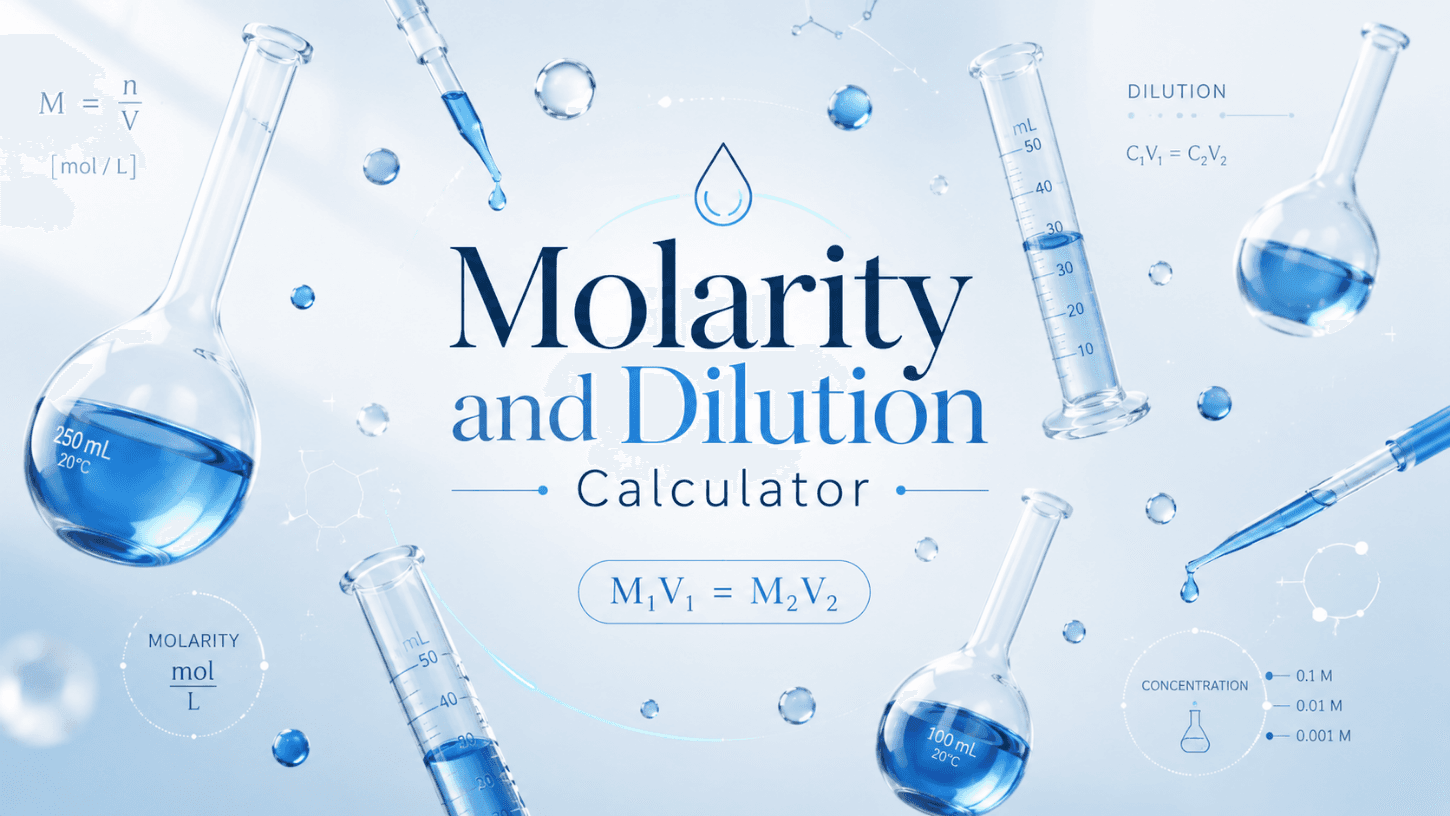
Molarity and Dilution Calculator

9 mins read

Molarity and Dilution Calculator

A free molarity and dilution calculator covering four essential lab calculations: C1V1=C2V2 dilution (solve for any unknown), molarity from mass, mass from molarity, and serial dilution table generation. Includes worked examples, a concentration units guide and step-by-step preparation instructions for every result.

Read full story
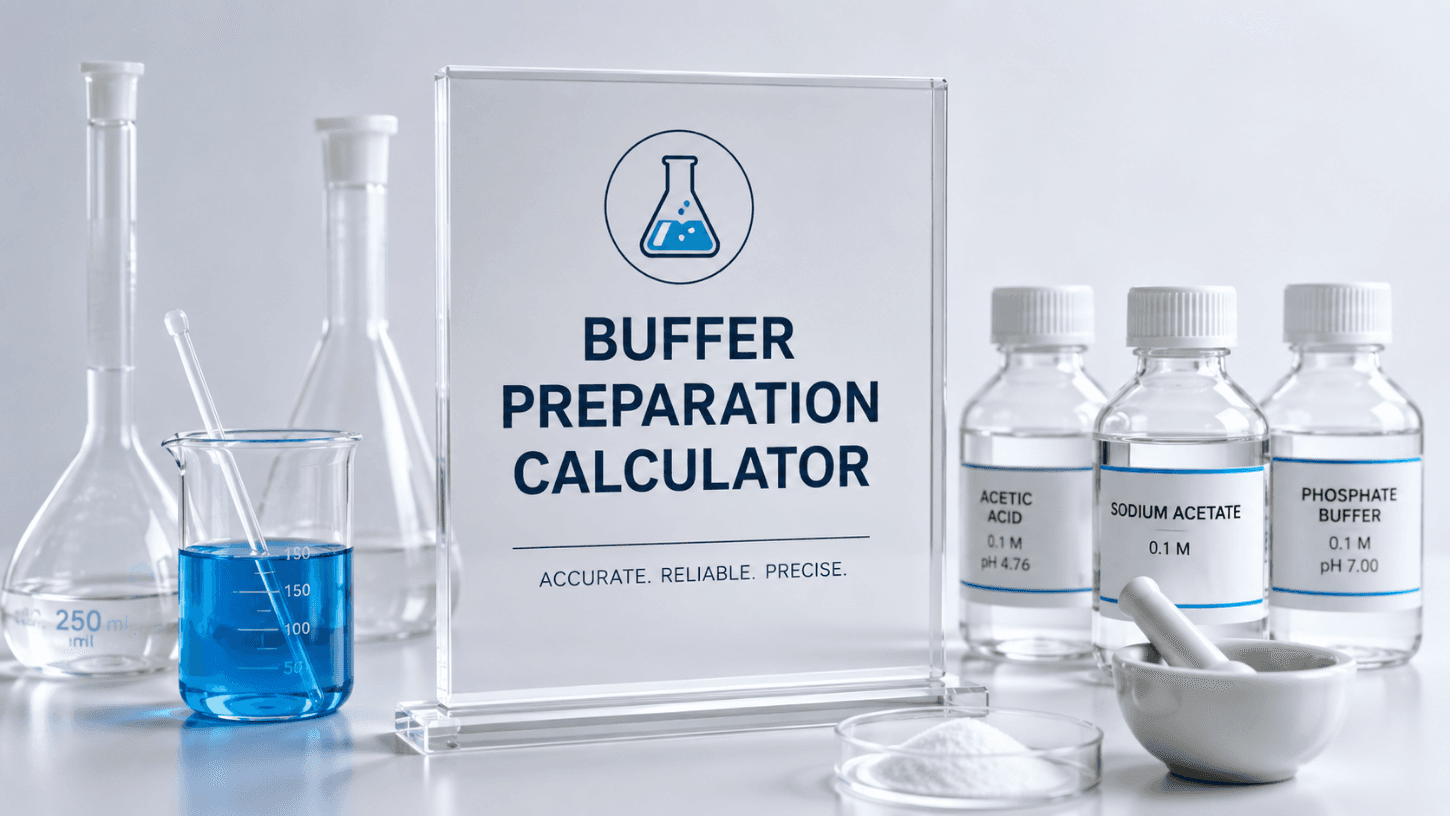
Buffer Preparation Calculator

9 mins read

Buffer Preparation Calculator

Free online buffer preparation calculator. Select your buffer system, enter target pH, concentration and volume, and get an exact lab-ready recipe with reagent masses and step-by-step instructions. Covers PBS, Tris-HCl, sodium phosphate, acetate, HEPES, MOPS and more.

Read full story