Latest News

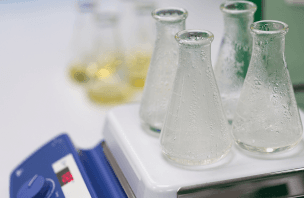
Cleaning Lab Glassware: Removing Stubborn Residue

Cleaning laboratory glassware properly is essential for accurate, safe, and repeatable lab work. This guide explains how to remove stubborn residue from beakers, flasks, bottles, volumetric glassware, and other lab glassware, including grease, dried salts, biological residue, stains, and burnt deposits. It also covers safe cleaning methods, common mistakes, drying and storage tips, and when damaged glassware should be replaced.

Read full story

More insights

  • Best Water Baths for Research Labs

    4 mins read

    Best Water Baths for Research Labs

    Choosing the best water bath for a research lab involves more than comparing tank size or maximum temperature. This guide explains what to look for in a laboratory water bath, including temperature range, stability, uniformity, capacity, evaporation control, and accessories, while highlighting current LabFriend options from PolyScience, Thermo Scientific, and Grant Instruments.

    Read full story
  • How to Select the Right Lab Refrigerator & Freezer for Your Laboratory

    4 mins read

    How to Select the Right Lab Refrigerator & Freezer for Your Laboratory

    Choosing the right lab refrigerator or freezer is essential for protecting samples, maintaining temperature stability, and supporting reliable laboratory workflows. This guide explains how to compare refrigerated and frozen storage options based on application, temperature range, capacity, monitoring features, energy use, and long-term operating needs. It is designed to help laboratories make a more informed cold storage decision for reagents, biological samples, chemicals, and other temperature-sensitive materials.

    Read full story
  • Erlenmeyer Flask Guide: Uses, Sizes & How to Choose the Right One for Your Lab

    5 mins read

    Erlenmeyer Flask Guide: Uses, Sizes & How to Choose the Right One for Your Lab

    This guide explains what an Erlenmeyer flask is, its key uses across chemistry and microbiology, and how to select the right size and material for your application. It covers practical considerations such as capacity, chemical resistance, and autoclavability, while comparing it to other common laboratory glassware. The article also highlights common mistakes to avoid and provides guidance on choosing reliable options from trusted laboratory brands.

    Read full story
  • How to Choose a pH Meter for the Lab

    3 mins read

    How to Choose a pH Meter for the Lab

    pH meters are essential laboratory instruments used to measure the acidity and alkalinity of liquid samples across chemistry, life science, environmental, food, water, and pharmaceutical workflows. This guide explains how to choose the right pH meter for the lab by comparing portable, benchtop, and multiparameter systems, while also covering key selection factors such as accuracy, sample type, calibration, and electrode compatibility.

    Read full story
  • 10 Essential Pieces of Laboratory Glassware Every Lab Needs

    4 mins read

    10 Essential Pieces of Laboratory Glassware Every Lab Needs

    Laboratory glassware is essential for measuring, mixing, heating, storing, and transferring liquids and chemicals in scientific workflows. This guide highlights 10 essential pieces of laboratory glassware every lab should have, including beakers, Erlenmeyer flasks, volumetric flasks, graduated cylinders, test tubes, burettes, pipettes, watch glasses, funnels, and petri dishes. It also explains why material quality, accuracy, and application suitability matter when selecting the right glassware for research, analytical, microbiology, and educational laboratories.

    Read full story
  • How to Choose the Right Top Pan Balance for Your Laboratory

    3 mins read

    How to Choose the Right Top Pan Balance for Your Laboratory

    Top pan balances are widely used laboratory instruments designed for precise weighing in research, quality control, and educational laboratories. They provide an excellent balance between capacity and accuracy, making them ideal for routine weighing tasks such as preparing chemical solutions, measuring reagents, and performing sample preparation. This guide explains how top pan balances work, how they differ from analytical balances, and the key factors laboratories should consider when selecting the right model for their weighing applications.

    Read full story
  • Best Laboratory Ovens for Research and Industrial Laboratories

    3 mins read

    Best Laboratory Ovens for Research and Industrial Laboratories

    Laboratory ovens are essential heating instruments used in research, quality control, and industrial laboratories for applications such as drying samples, sterilising equipment, curing materials, and performing stability testing. This guide explains the different types of laboratory ovens, including gravity convection, mechanical convection, and vacuum ovens, while outlining key features to consider when selecting the right model for your lab. It also explores common applications, temperature requirements, and leading manufacturers, helping researchers and laboratory managers make informed equipment decisions.

    Read full story
  • Ultimate Guide to Analytical Balances 2026

    2 mins read

    Ultimate Guide to Analytical Balances 2026

    Accuracy in the lab begins with the right weighing equipment. This guide provides a comprehensive look at choosing an analytical balance in 2026, focusing on the critical differences between readability and capacity, the benefits of internal vs. external calibration, and the importance of environmental stability. We highlight top-performing models from Sartorius and KERN, helping lab managers ensure data integrity and audit compliance through modern digital connectivity and proper maintenance.

    Read full story
  • Fisher vs. Sigma vs. Labfriend: Which is Right for Your Startup?

    2 mins read

    Fisher vs. Sigma vs. Labfriend: Which is Right for Your Startup?

    Choosing a laboratory supplier is a foundational decision for any new science venture. While industry giants like Fisher Scientific and Sigma-Aldrich offer vast catalogs, they often come with complex pricing structures and slow procurement cycles that can hinder a fast-moving startup. This guide explores how LabFriend provides a modern, digital-first alternative by offering instant price transparency, an unbiased selection of over 400 global brands like IKA and Sartorius, and high-quality, cost-effective essentials from LLG Labware. By comparing service speed, brand flexibility, and budget impact, we help innovators determine which procurement model aligns with their research goals and scaling requirements in 2026.

    Read full story
  • 8 Common Hotplate Stirrer Mistakes (and How to Avoid Them)

    4 mins read

    8 Common Hotplate Stirrer Mistakes (and How to Avoid Them)

    This guide addresses a critical gap in laboratory safety: the misuse of heating and stirring equipment. Despite being everyday tools, heating devices are responsible for nearly 25% of all laboratory fires according to 2026 data from the National Fire Protection Association (NFPA) and Penn EHRS. We break down the eight most frequent errors—ranging from using incompatible soda-lime glassware to neglecting external temperature probes—and provide actionable, source-backed solutions. By following these protocols and utilizing high-performance equipment from brands like DWK Life Sciences, IKA, and Velp, researchers can ensure a safer, more efficient, and highly reproducible laboratory environment.

    Read full story
  • The Scientist’s Guide to DWK Life Sciences: Precision, Reliability, and Sustainability

    2 mins read

    The Scientist’s Guide to DWK Life Sciences: Precision, Reliability, and Sustainability

    DWK Life Sciences is one of the world’s most trusted manufacturers of laboratory glassware, plasticware and scientific packaging. Known for the durability and purity of DURAN borosilicate glass, DWK products are used across research, industry, diagnostics and pharmaceutical environments. This brand guide covers everything scientists need to know, including DWK’s history, strengths, product range and why laboratories continue to rely on their precision-engineered materials.

    Read full story
  • Mastering Microbiology: 8 Common Petri Dish Mistakes and How to Avoid Them

    2 mins read

    Mastering Microbiology: 8 Common Petri Dish Mistakes and How to Avoid Them

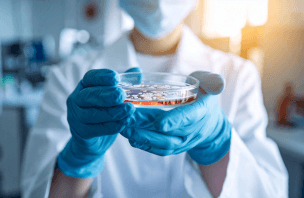
    Petri dishes may look simple, but small handling errors can dramatically affect contamination rates, colony morphology and overall experimental accuracy. This guide highlights the eight most common mistakes scientists make when pouring, handling and incubating Petri dishes, along with practical tips to improve consistency and reliability in microbiology workflows.

    Read full story