The Starlight Opto Fiberoptical Lighting Systems with passive cooling offers high-quality illumination for precision applications. Featuring a 30 W output, 3.000 K color temperature, and CRI 80, this lighting system ensures accurate color rendering and stable performance. Its passive cooling design ensures silent, maintenance-free operation—ideal for professional and laboratory environments requiring reliable and consistent lighting.
Key Features:
Brand: Starlight Opto
Cooling: Passive cooling for silent operation
Power: 30 W
Color Temperature: 3.000 K
CRI: 80 for accurate color rendering
Application: Ideal for labs, optical systems, and precision lighting setups
This lighting system is a reliable solution where clarity, performance, and silence are key requirements.
It offers high-quality illumination for precision applications. Featuring a 30 W output, 3.000 K color temperature, and CRI 80, this lighting system ensures accurate color rendering and stable performance. Its passive cooling design ensures silent, maintenance-free operation, ideal for professional and laboratory environments requiring reliable and consistent lighting.
Yes. It is designed for labs, optical systems, and precision lighting setups, and offers a power of 30 W and a color temperature of 3.000 K to support this kind of work.
It has a power of 30 W, a color temperature of 3.000 K and a CRI of 80 for accurate color rendering.
It offers passive cooling for silent operation, adaptable to various light guides, flicker-free lighting and solid aluminium housing.
Cleaning laboratory glassware properly is essential for accurate, safe, and repeatable lab work. This guide explains how to remove stubborn residue from beakers, flasks, bottles, volumetric glassware, and other lab glassware, including grease, dried salts, biological residue, stains, and burnt deposits. It also covers safe cleaning methods, common mistakes, drying and storage tips, and when damaged glassware should be replaced.
Pipette calibration helps laboratories confirm that liquid handling results remain accurate, repeatable, and traceable. This guide explains how pipettes are calibrated to ISO 8655 standards, including gravimetric testing, environmental control, correct tip selection, volume testing, calibration records, and common mistakes to avoid. It also covers when to use in-house calibration and when an external calibration service may be more suitable.
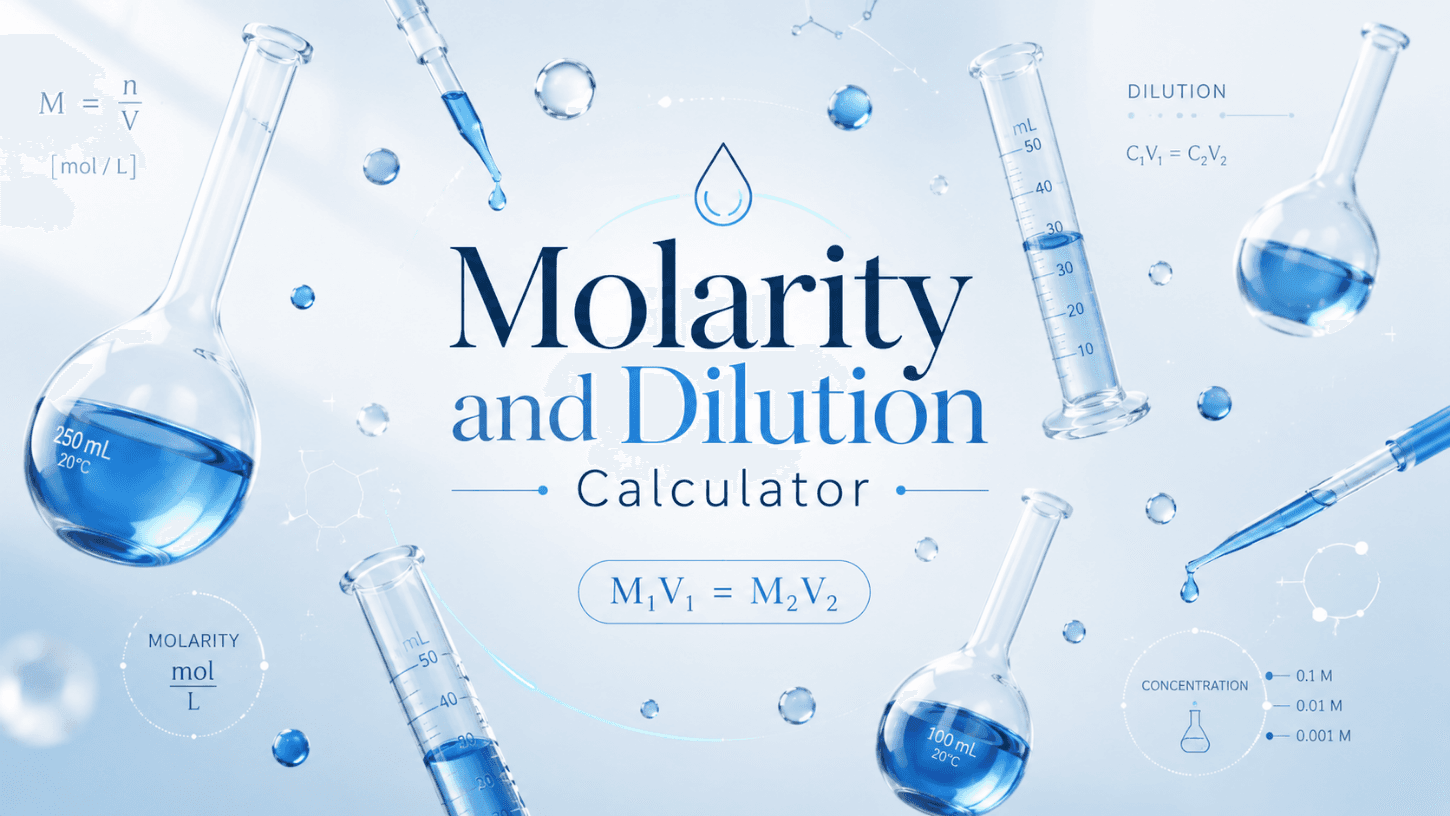
A free molarity and dilution calculator covering four essential lab calculations: C1V1=C2V2 dilution (solve for any unknown), molarity from mass, mass from molarity, and serial dilution table generation. Includes worked examples, a concentration units guide and step-by-step preparation instructions for every result.
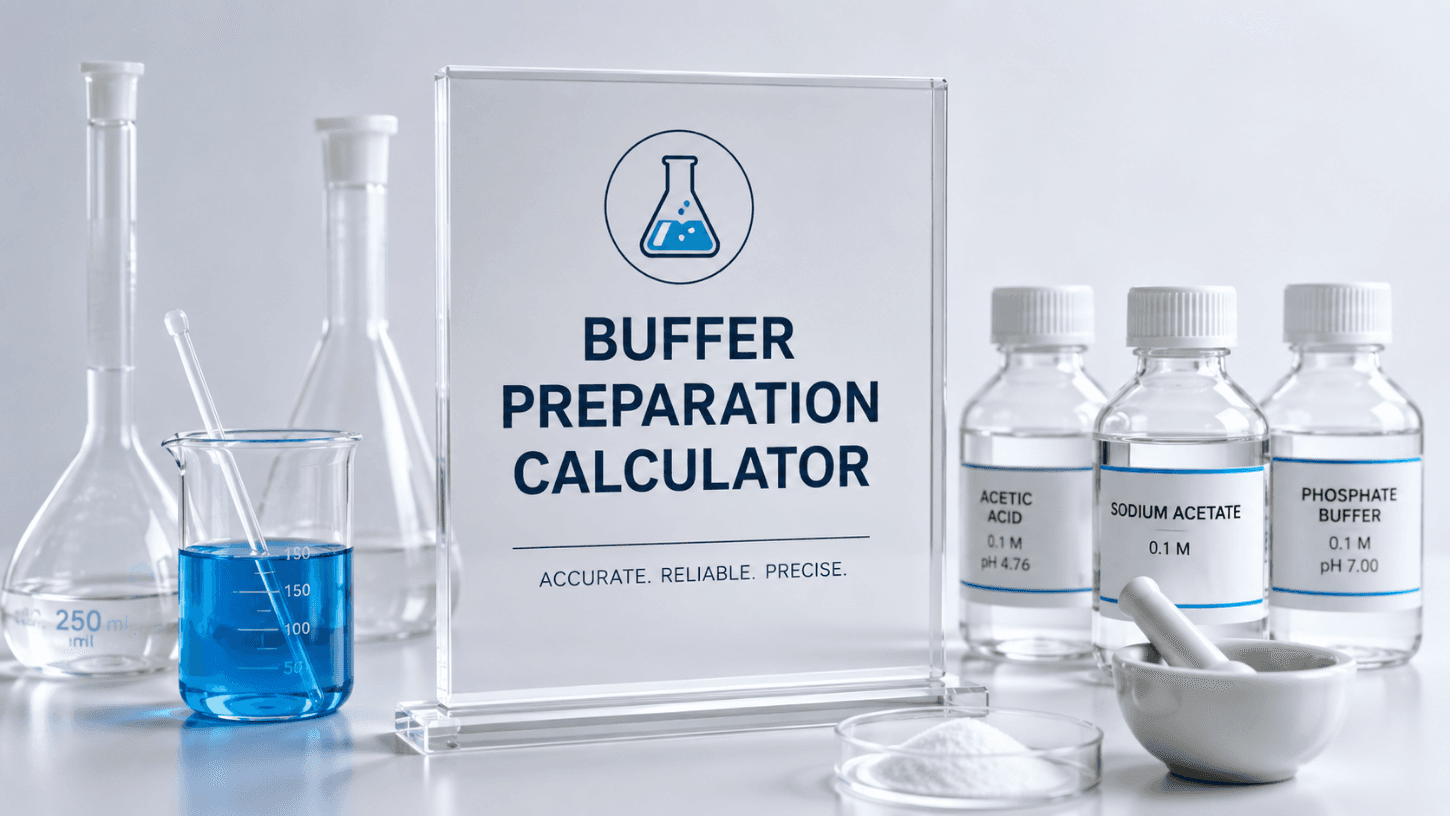
Free online buffer preparation calculator. Select your buffer system, enter target pH, concentration and volume, and get an exact lab-ready recipe with reagent masses and step-by-step instructions. Covers PBS, Tris-HCl, sodium phosphate, acetate, HEPES, MOPS and more.
Laboratory balances are essential weighing instruments used to measure samples, reagents, powders, chemicals and materials with accuracy and consistency. They are commonly used in research, education, quality control, pharmaceutical testing, food testing, industrial laboratories and general scientific workflows.