The Ratiolab Pipet Tips 1–5 mL in Rack, Pack of 50, are designed for precise and contamination-free liquid handling in laboratory applications. These high-quality polypropylene tips feature a tight-fitting cone for optimal sealing and minimal sample retention. They are sterilized and free of DNase, RNase, and pyrogens, ensuring reliability in sensitive experiments. Compatible with all standard single and multichannel pipettes, these tips offer excellent transparency and are autoclavable for reuse.
Key Features:
Brand: Ratiolab
Volume Range: 1–5 mL
Type: Pipet Tips
Material: High-quality polypropylene
Sterilization: Sterilized and free of DNase, RNase, and pyrogens
Packaging: Pack of 50 tips in a rack
Compatibility: Suitable for all standard single and multichannel pipettes
Autoclavable: Yes
Transparency: Excellent
These sterilized pipet tips are essential for laboratories requiring reliable and contamination-free tools for accurate liquid measurement.
It are designed for precise and contamination-free liquid handling in laboratory applications. These high-quality polypropylene tips feature a tight-fitting cone for optimal sealing and minimal sample retention. They are sterilized and free of DNase, RNase, and pyrogens, ensuring reliability in sensitive experiments. Compatible with all standard single and multichannel pipettes, these tips offer excellent transparency and are autoclavable for reuse.
Cleaning laboratory glassware properly is essential for accurate, safe, and repeatable lab work. This guide explains how to remove stubborn residue from beakers, flasks, bottles, volumetric glassware, and other lab glassware, including grease, dried salts, biological residue, stains, and burnt deposits. It also covers safe cleaning methods, common mistakes, drying and storage tips, and when damaged glassware should be replaced.
Pipette calibration helps laboratories confirm that liquid handling results remain accurate, repeatable, and traceable. This guide explains how pipettes are calibrated to ISO 8655 standards, including gravimetric testing, environmental control, correct tip selection, volume testing, calibration records, and common mistakes to avoid. It also covers when to use in-house calibration and when an external calibration service may be more suitable.
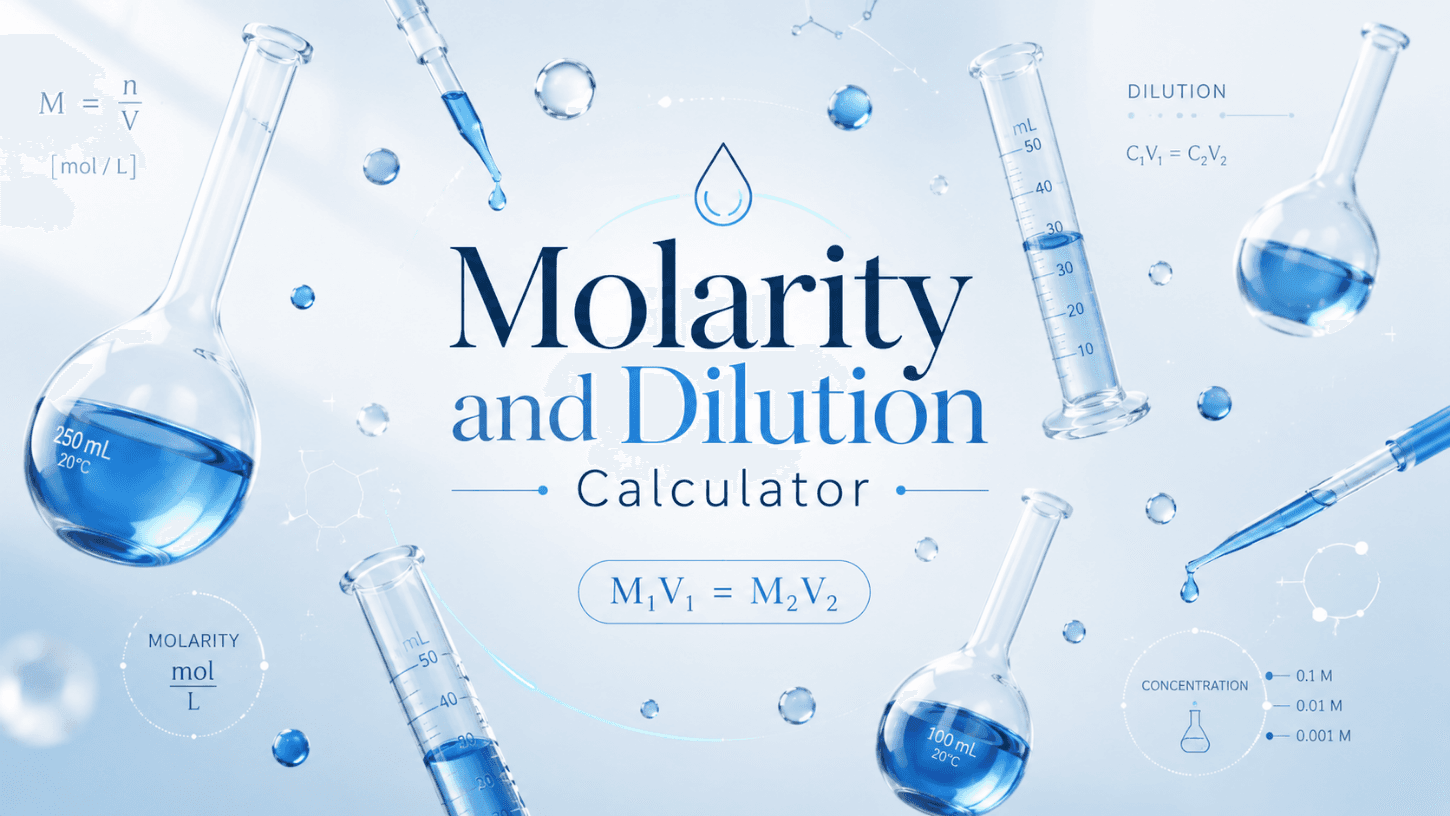
A free molarity and dilution calculator covering four essential lab calculations: C1V1=C2V2 dilution (solve for any unknown), molarity from mass, mass from molarity, and serial dilution table generation. Includes worked examples, a concentration units guide and step-by-step preparation instructions for every result.
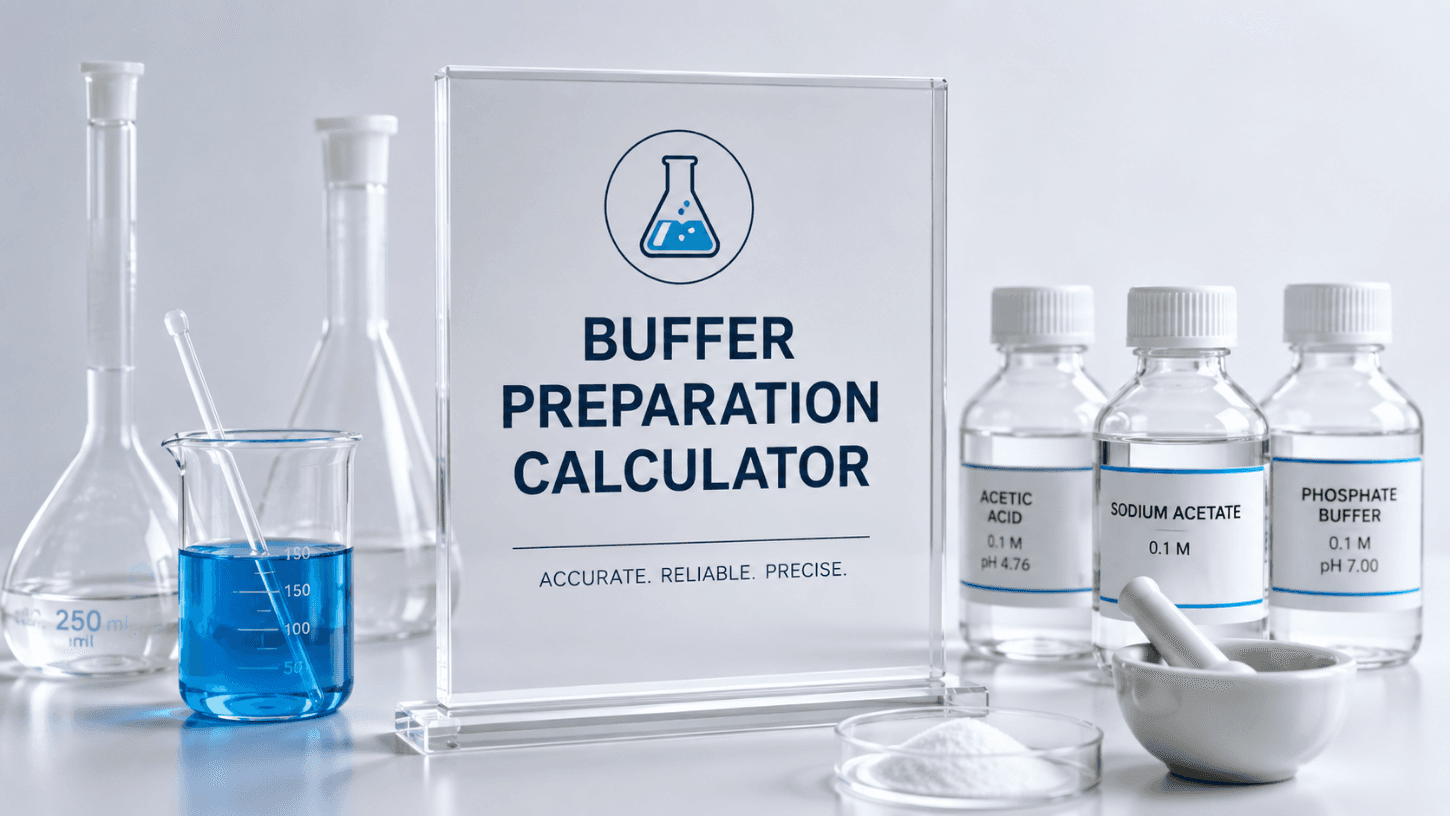
Free online buffer preparation calculator. Select your buffer system, enter target pH, concentration and volume, and get an exact lab-ready recipe with reagent masses and step-by-step instructions. Covers PBS, Tris-HCl, sodium phosphate, acetate, HEPES, MOPS and more.
Laboratory balances are essential weighing instruments used to measure samples, reagents, powders, chemicals and materials with accuracy and consistency. They are commonly used in research, education, quality control, pharmaceutical testing, food testing, industrial laboratories and general scientific workflows.